Gas Storage vs Instantaneous Hot Water: Which Is Right for You?
Comparing gas storage tanks and continuous flow systems for Perth homes. Running costs, water pressure, household size considerations, and installation.
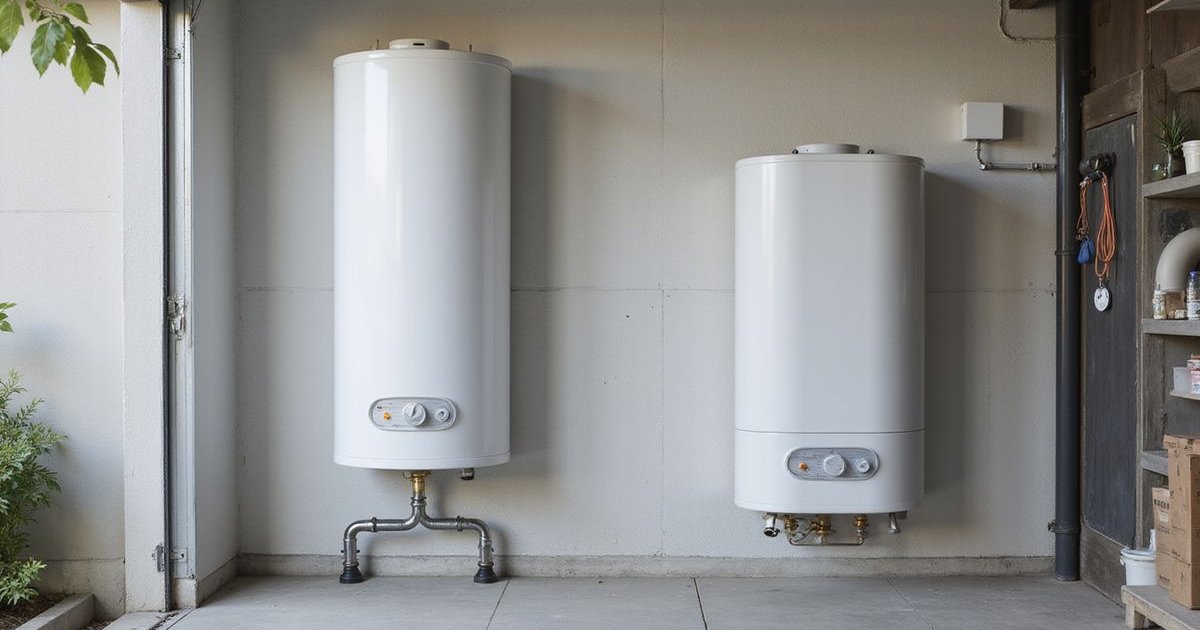
Choosing between gas storage and instantaneous hot water systems is a decision we see Perth homeowners wrestle with every week. You know how gas bills in WA seem to creep up every winter? That financial pressure often drives the conversation, but the “cheaper” option on paper isn’t always the winner in practice.
We founded Hot Water System Perth in 2021 to help locals navigate these exact trade-offs without the sales fluff. From what we’ve seen in the field, the right choice usually comes down to your home’s existing plumbing infrastructure rather than just your personal preference.
Let’s break down the real-world performance data, the hidden installation costs most quotes leave out, and the specific maintenance Perth’s hard water demands.
Gas Storage Systems
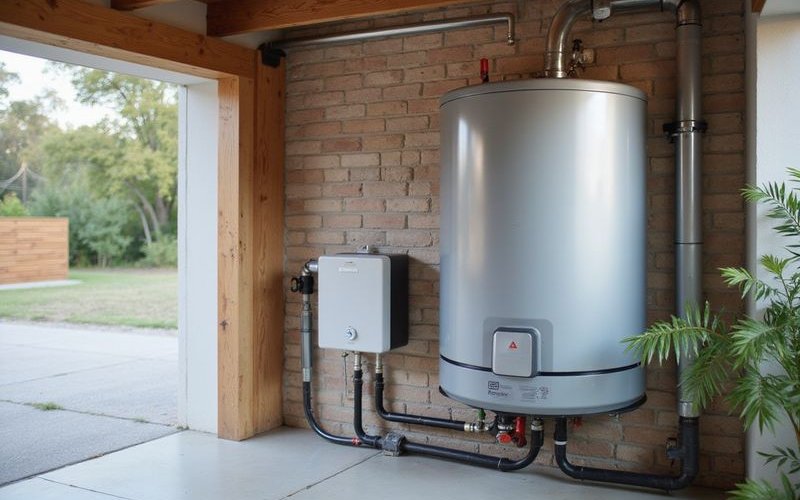
How they work: A gas burner heats water stored in an insulated tank, typically keeping it between 60°C and 70°C. When you turn on a tap, hot water flows from the top of the tank while cold water enters the bottom, triggering the burner to fire up again.
Advantages:
- Lower upfront cost: A standard replacement often sits between $1,800 and $3,500 fully installed.
- Instant delivery: You get full pressure hot water the second you turn the tap, with no lag time.
- Works without power: older pilot-light models (like the Rheem Stellar 330 or Vulcan Freeloader) keep working during blackouts.
- Gentler on old pipes: These systems rarely require gas pipe upgrades, using standard 15mm connections.
Disadvantages:
- The “vampire” cost: You pay to keep water hot 24/7, even when you’re on holiday.
- Tank rot risk: Steel tanks are vulnerable to corrosion, especially given Perth’s mineral-heavy water.
- Limited capacity: Once the 135L or 170L tank is empty, you are waiting roughly 45-60 minutes for a full recovery.
- Space hog: You lose significant floor space, which can be a dealbreaker in smaller courtyards.
Pro Tip: The Anode Rod Maintenance Check
We tell every customer with a storage tank to check their sacrificial anode every 3 to 5 years. In many Perth suburbs, hard water eats through these magnesium rods faster than the manufacturer’s warranty period. If you ignore this $200 maintenance task, the tank itself will rust out, leading to a $2,000+ replacement bill.
Gas Continuous Flow (Instantaneous)
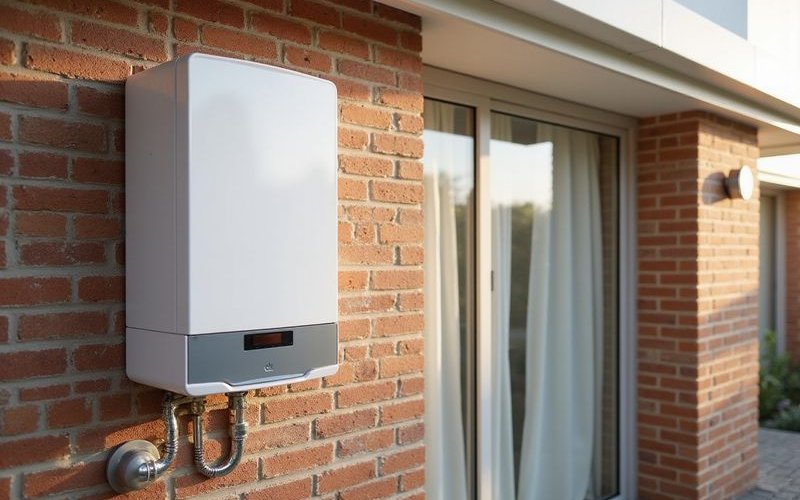
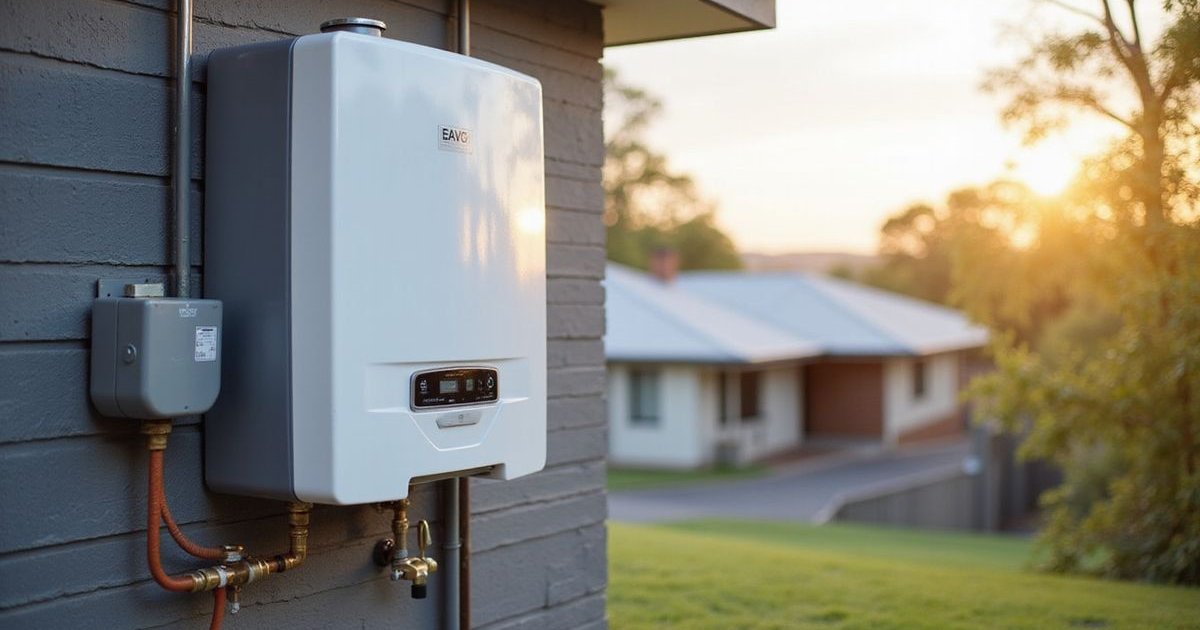
How they work: These units are smart. They sit dormant until you open a hot tap, at which point a flow sensor triggers the burner to heat water instantly as it passes through a copper heat exchanger.
Advantages:
- Endless supply: You can shower for three hours straight, and the water will never run cold.
- Efficiency gains: You eliminate standby heat loss entirely, which can shave roughly $100-$150 off your annual gas bill.
- Space saving: Units like the Rinnai Infinity or Rheem Metro are roughly the size of a carry-on suitcase and mount on the wall.
- Longevity: Without a tank to rust, these units often last 20+ years with proper maintenance.
- Precise control: Optional digital controllers allow you to set the exact temperature (e.g., 50°C) for safety.
Disadvantages:
- Lag time: You will wait 5-10 seconds for the unit to fire up and push hot water to the tap.
- Minimum flow requirement: If you have water-saving showerheads (under 3L/min), the unit might not detect enough flow to ignite.
- Power dependency: Standard models need a 240V power point for the ignition and fan, so no hot water during a blackout.
- Scale buildup: The narrow heat exchangers are more sensitive to calcium buildup from hard water.
The “Hidden” Installation Cost: Pipe Sizing
This is the number one surprise for homeowners switching from storage to instantaneous. Instantaneous units require a massive burst of gas (up to 200MJ/hr) to heat water instantly. Most older Perth homes only have 15mm gas pipes, which are too small to deliver that volume. Upgrading your gas line from the meter to the unit (to 20mm or 25mm) typically adds $500 to $1,500 to the installation cost depending on the run length.
Side-by-Side Comparison
Making the right choice often comes down to the numbers. We have compiled this data based on typical Perth households and current 2025/2026 pricing estimates.
| Feature | Gas Storage (4 Star) | Instantaneous (6+ Star) |
|---|---|---|
| Lifespan | 10-12 Years | 15-20 Years |
| Water Pressure | High (Mains Pressure) | Variable (Flow restricted) |
| Blackout Ready | Yes (Older models) | No (Requires electricity) |
| Space Required | 600mm x 600mm Floor | Wall Space Only |
| Maintenance | Anode check every 5 years | Flush heat exchanger if hard water |
| Initial Cost | $$ | $$$ (due to pipe upgrades) |
| Running Cost | Higher (Standby loss) | Lower (On-demand only) |
Choosing Based on Household Size
1-2 People: An instantaneous system is often overkill here unless you need the space. A small 135L storage unit is cheap to install and provides plenty of water for two. However, if you travel frequently, instantaneous saves money because you aren’t heating an empty house.
3-4 People: This is the battleground. A 170L storage unit handles this load well, but back-to-back showers will deplete it. We often recommend a 26L/min continuous flow unit here so you never have to schedule showers.
5+ People or Multiple Bathrooms: Continuous flow is the clear winner. Storage tanks simply cannot recover fast enough for five morning showers. You should look for a “high recovery” or 26L+ continuous flow system to handle simultaneous taps.
Running Cost Comparison
Gas Storage (170L): $450-$650/year
- The Reality: You are paying for gas to keep 170L of water hot at 3am.
- The Trend: As gas tariffs rise, that “standby” cost becomes a larger portion of your bill.
Continuous Flow (26L/min): $350-$550/year
- The Reality: You only pay when the tap is open.
- The Savings: Heavy users see the biggest return on investment.
- The Catch: Because the supply is endless, teenagers tend to take longer showers, which can eat into your gas savings.
The Perth Factor: Water Hardness
Perth water is notoriously hard, meaning it has high levels of dissolved calcium and minerals. This geology impacts your hot water system choice significantly.
For Storage Systems: The minerals attack the steel tank. This makes the sacrificial anode rod essential. If you live in areas like the hills or near the coast, check that anode every 3 years.
For Instantaneous Systems: Scale builds up inside the copper heat exchanger pipes. This acts as insulation, forcing the burner to work harder and reducing efficiency by up to 20% over time. We recommend setting the temperature to 50°C rather than 60°C+ to reduce the rate of scale formation.
Installation Considerations
Gas Storage:
- Footprint: Needs a solid concrete base or plinth.
- Clearance: Easier to install near windows as they have lower flue gas temperatures.
- Weight: A full tank weighs over 200kg, so structural support is key for timber floors.
Continuous Flow:
- Electrical: You must have a weatherproof power point (GPO) within 1 meter of the unit.
- Flue Terminals: Under AS/NZS 5601.1:2022 standards, these units need strict clearance from opening windows and vents.
- Gas Pressure: As mentioned, your gas pipe size is the critical “go/no-go” factor.
Our Recommendation
Choose storage if:
- You are on a tight upfront budget and replacing a like-for-like unit.
- Your gas meter is far from the bathroom (avoiding expensive pipe upgrades).
- You have low water pressure (gravity fed systems).
- You want a system that works during power outages.
Choose continuous flow if:
- You plan to stay in the home for 10+ years (recouping the installation cost).
- You have limited outdoor space.
- You have a large family that runs the tank dry regularly.
- You are renovating and want to move the hot water system to a new location.
Getting Expert Advice
Not sure which suits your home? Contact us for a free assessment. We will check your gas pipe diameter, test your water pressure, and look at your usage patterns to recommend the system that actually fits your life.
Have Questions About Your Hot Water System?
Our team is ready to help with expert advice and professional service.