Should You Repair or Replace Your Hot Water System?
When to repair and when to replace your hot water system. Age considerations, repair costs, efficiency gains, and making the right decision.
Here is the comprehensive, enriched, and rewritten article based on your requirements.
When you turn the tap and get hit with icy water, the panic sets in quickly. Your first instinct is probably to call for hot water repairs, but that isn’t always the smartest financial move.
We see this scenario every week in Perth homes. A homeowner spends $600 repairing a twelve-year-old system, only for the tank to burst three months later.
The decision between repairing and replacing has changed significantly in 2026. With rising energy prices and new government rebates for energy-efficient upgrades, the “cheaper” repair option often ends up costing thousands more in the long run.
We will break down the exact math, the hidden costs you need to watch for, and the simple framework our team uses to advise clients.
The 50% Rule (Updated for 2026)
A classic industry guideline suggests that if a repair costs more than 50% of the price of a new unit, you should replace it.
The math in action:
- New System Cost: A standard gas storage replacement might cost around $2,200 installed.
- The Threshold: 50% of that is $1,100.
- The Decision: If your repair quote is $1,100 or higher, replacement is the safer bet.
This rule is a solid starting point, but it ignores a critical factor: the “sunk cost” of efficient technology.
If you are repairing an old electric storage unit, you are paying to keep a system that costs you over $1,200 a year to run. Replacing it with a modern heat pump could drop that running cost to under $400. In this case, even a “cheap” $300 repair might be a waste of money if it delays an upgrade that saves you $800 annually.
Age Matters More Than You Think
Understanding the life expectancy of your specific unit is the single most important factor in your decision.
We often find that Perth’s water quality can accelerate wear, meaning national averages don’t always apply here without maintenance.
Typical Lifespans in Australia:
- Electric Storage: 10-15 years
- Gas Storage: 8-12 years
- Gas Continuous Flow: 15-20 years
- Heat Pump: 10-15 years
- Solar: 15-20 years (panels), 10-12 years (tank)
Insider Tip: Check the compliance plate on your unit. It is usually a silver sticker or metal plate found on the side of the tank. It will list a “Date of Manufacture.” If your tank is over 12 years old and leaking, do not repair it—the internal lining has likely failed.
The Real Decision Framework
Our team uses a four-point check to give homeowners an honest recommendation.
1. System Age Relative to Lifespan
- Under 50% (e.g., less than 5 years old): Almost always repair. The system has plenty of life left.
- 50-75% (e.g., 6-9 years old): Evaluate the specific part. A valve is worth fixing; a tank leak is not.
- Over 75% (e.g., 10+ years old): Lean heavily toward replacement.
2. The Nature of the Failure
Not all repairs are created equal.
- Minor Fixes (Repair): Thermostats ($150-$250), pressure relief valves ($140-$200), or sacrificial anodes ($200-$300).
- Major Failures (Replace): Rusted cylinders, burst tanks, or blown compressors on old heat pumps.
3. Previous Repair History
Is this the first time you’ve called a plumber for this unit?
- First issue: Repair is likely a good option.
- Repeat offender: If you repaired it last year and it’s broken again, stop throwing good money after bad.
4. The Efficiency Opportunity
This is the “hidden” cost of repairing.
- Old System: An old electric system is like driving a car with a hole in the fuel tank.
- New System: Modern systems can utilize the “solar sponge” (running during the day) to heat water for free using your rooftop solar.
When Repair Makes Sense
You should book a repair if your situation meets these criteria:
- The system is under 6 years old.
- The water is lukewarm, not cold (often a simple thermostat or element fix).
- The repair quote is under $400.
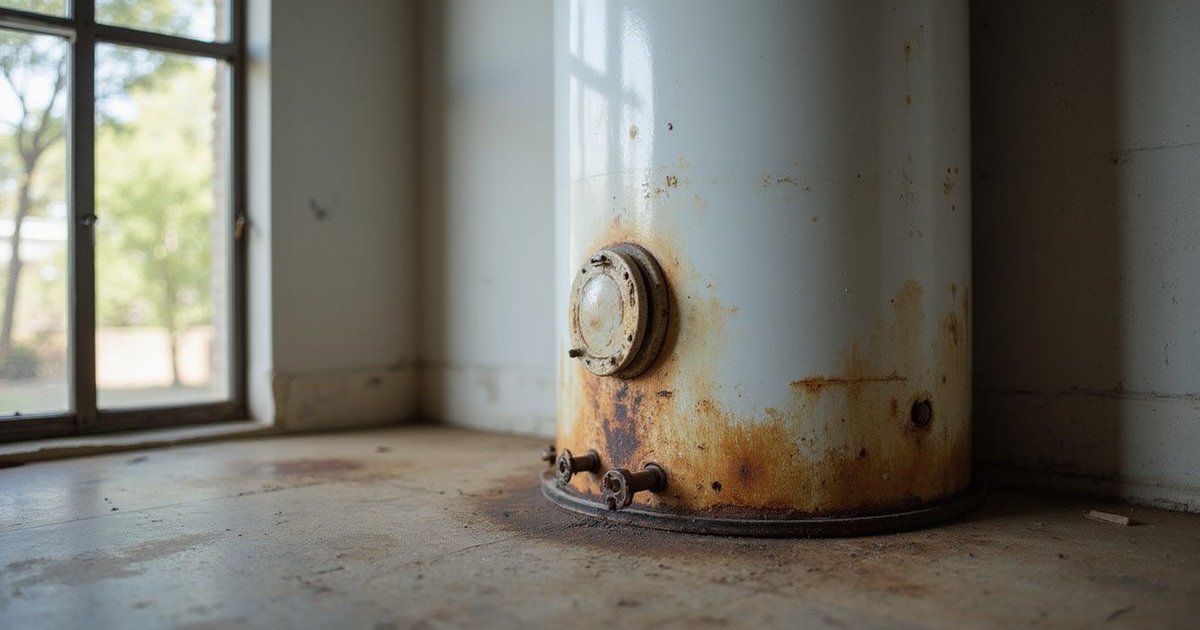
- The tank itself is dry and shows no signs of rust around the base.
- You are happy with your current energy bills.
When Replacement Makes Sense
It is time to upgrade if you see these red flags:
- Rusty Water: Brown or copper-colored water indicates the inside of your tank is corroding.
- Tank Leaks: If water is pooling at the base of the cylinder, the vessel has failed. This cannot be patched.
- Soaring Energy Bills: You are using an old electric storage unit and paying over $400/quarter for electricity.
- Costly Components: The quote involves a gas control valve or PC board costing $700+.
The Efficiency Upgrade Angle
The biggest shift in the 2026 market is the financial argument for dumping electric storage systems.
We strongly encourage homeowners to look at the total cost of ownership over 10 years, not just the upfront price.
Running Cost Comparison (Estimated 2026 Data):
| System Type | Avg. Annual Running Cost | 10-Year Total Cost |
|---|---|---|
| Electric Storage (Off-Peak) | $900 - $1,200 | $9,000 - $12,000 |
| Gas Storage (Natural Gas) | $1,100 - $1,300 | $11,000 - $13,000 |
| Heat Pump (High Efficiency) | $300 - $450 | $3,000 - $4,500 |
Switching to a heat pump can save you roughly $7,000 over the life of the system.
Government Rebates: In Australia, Small-scale Technology Certificates (STCs) still apply to heat pump upgrades in 2026. These can knock $600 to $1,000 off the upfront cost of a new system, making the price gap between “repair” and “replace” much smaller than you might think.
Our Honest Approach
Our goal is to build long-term relationships with Perth families, not just make a quick sale.
We adhere to a strict “repair-first” policy whenever it is economically viable. If we arrive at your home and find a simple $180 valve needs replacing, we will do that rather than pushing a $3,000 new system.
However, we will also be direct if a repair is unsafe or a waste of your money.
Questions to Ask Your Plumber
Protect yourself from hidden costs by asking these specific questions before approving any work:
- “Is this quote for a repair guaranteed?” (If the part fails next week, do you pay again?)
- “Does the replacement quote include mandatory tempering valves?” (Current AU standards require these, and they can add $200-$300 to the bill).
- “Will you dispose of the old tank?” (Dumping fees can be a nasty surprise).
- “What is the date of manufacture on my current unit?” (Ask them to show you).
- “Are there any rebates available for this upgrade?”
Contact Us
You don’t have to make this decision alone.
For an honest assessment of your repair-or-replace decision, contact us. We will evaluate your system and provide clear options with our recommendation.
Have Questions About Your Hot Water System?
Our team is ready to help with expert advice and professional service.