7 Signs Your Gas Hot Water System Is Failing
Warning signs that your gas hot water system needs attention. From pilot light issues to strange noises, know when to repair or replace.
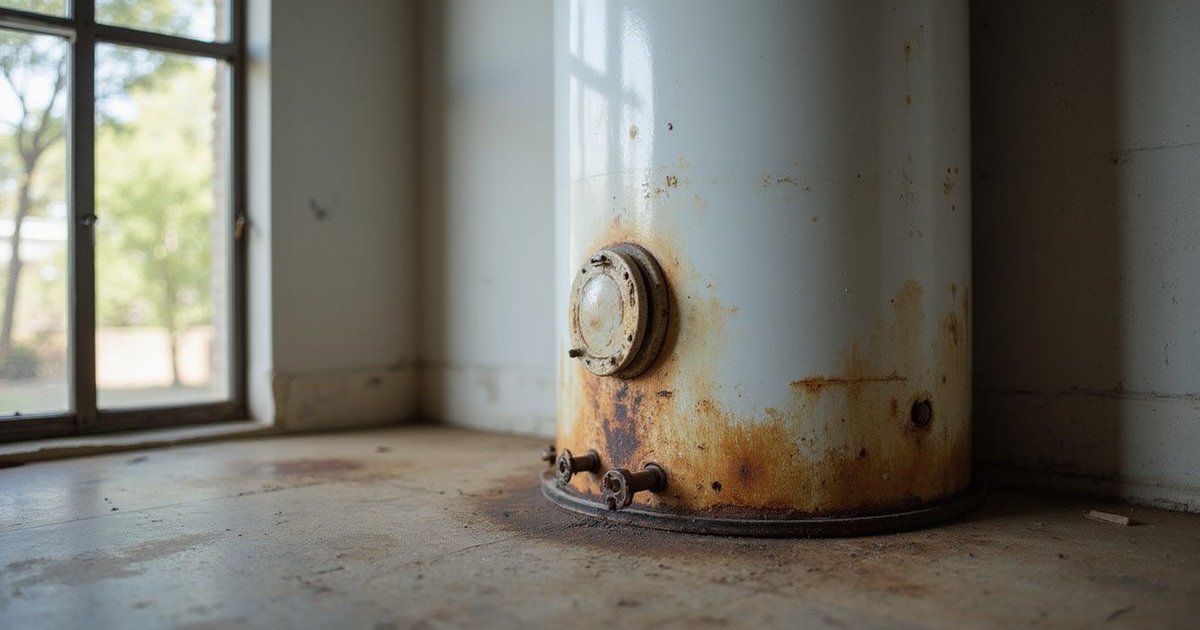
The signs of a failing gas hot water system are rarely subtle, yet we find that most homeowners overlook them until they’re standing in a freezing shower. In our experience across Perth, the difference between a simple repair bill and a full emergency replacement often comes down to noticing these early warning signals.
You might be wondering if that strange noise or slight temperature drop is actually a problem or just a quirk of your home’s plumbing. From what we’ve seen in the field, ignoring these small symptoms usually leads to bigger, more expensive failures down the line.
We’re going to break down the seven clear indicators that your system is struggling, explain exactly what they mean for your wallet, and help you decide whether it’s time to repair or replace.
1. Pilot Light Problems
The symptom: The pilot light won’t stay lit, flickers yellow, or requires frequent relighting.
What it means: On older storage systems, this usually points to a faulty thermocouple. This small safety sensor detects the flame; if it fails, it cuts the gas supply to prevent leaks. In more modern systems with electronic ignition, a failure here often indicates a control board issue.
The Insider Tip:
“If you have a system with a standing pilot light (a flame that is always on), your unit is likely already over 10 years old. Modern systems, like the Rinnai Infinity or Rheem Stellar series, typically use electronic ignition to save gas. Persistent pilot light issues are often the first ‘nudge’ that your older technology is reaching its end.”
Urgency: Moderate. We often replace thermocouples for a standard call-out fee (typically between $150 and $300 AUD), but if the problem persists, the gas control valve itself might be failing, which is a much costlier repair.
2. Discoloured or Rusty Water
The symptom: Hot water appears brownish, reddish, or contains small flecks of sediment, while your cold water runs clear.
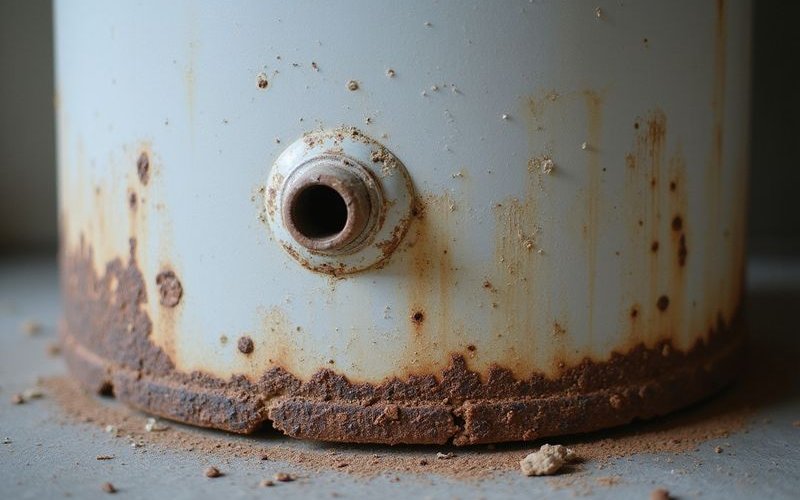
What it means: Your storage tank is rusting from the inside out. This happens when the sacrificial anode—a metal rod designed to attract corrosion instead of the tank walls—has completely depleted.
Why this matters: Once the anode is gone, the water eats away at the steel tank. We recommend replacing these anodes every 3-5 years, but in our experience, most homeowners never change them. If you see rust, it’s usually too late for maintenance.
Urgency: High. This is a terminal symptom. A rusted tank cannot be repaired, and a rupture is often imminent.
3. Strange Noises (Rumbling or Popping)
The symptom: You hear popping, crackling, banging, or a low rumbling sound coming from the tank, often described as “kettling.”
What it means: Sediment and mineral deposits (calcium and magnesium) have built up on the bottom of the tank. In Perth and other areas with varying water hardness, this layer hardens and traps water underneath it. As the burner heats the tank, that trapped water boils and explodes through the sediment layer, creating the noise.
The “So What?”: This sediment layer acts as an insulator, forcing your burner to work twice as hard to heat the water. This doesn’t just create noise; it overheats the metal tank bottom, leading to fatigue and eventual cracks.
Urgency: Moderate initially. You can sometimes fix this by flushing the tank, but if the noise is loud, the damage may already be done.
4. Water Temperature Fluctuations
The symptom: The water goes from hot to cold unpredictably, or never quite reaches a hot enough temperature.
What it means: While this can be a thermostat issue, we frequently find the culprit is actually the Tempering Valve.
- The Fact: Australian regulations (AS 3500.4) require a tempering valve to limit bathroom water temperature to 50°C to prevent scalding.
- The Issue: These valves have a lifespan of roughly 5-8 years. When they fail, they often restrict hot water flow or mix in too much cold water.
Actionable Advice: Check other taps in the house (like the kitchen or laundry) where water is often untempered (allowed to be 60°C). If the water is hot there but lukewarm in the shower, your hot water unit is fine—you just need a new tempering valve (approx. $180-$250 AUD plus labour).
Urgency: Moderate. This is often a repairable plumbing issue rather than a full system failure.
5. Visible Leaks
The symptom: Water pooling around the base of the unit, dripping from the pressure relief valve (PTR), or running down the side of the tank.
What it means:
- Top or Connection Leaks: Usually a loose fitting or a failed washer. These are cheap and easy fixes.
- Body/Base Leaks: This indicates a fracture in the internal storage cylinder.
The Compliance Context: If your system is installed indoors (like in a cupboard or roof space), it must have a “safe tray” with a drain to prevent property damage, as per Australian Standards. We see many older DIY installs missing this critical safety feature.
Urgency: Critical. If the leak is coming from the body of the tank, replacement is the only option. Turn off the water supply to the unit immediately to minimize damage.
6. Rising Gas Bills
The symptom: Your gas bill has jumped significantly (e.g., 20-30%) even though your usage hasn’t changed.
What it means: As systems age, they lose efficiency. Sediment buildup, worn burners, and failing insulation mean your system burns more gas to heat the same amount of water.
- The Data: Gas prices in Australia have risen sharply, with reports indicating a significant jump in recent years. An inefficient 3-star rated system from 2012 could be costing you hundreds of dollars more per year compared to a modern 5-star continuous flow unit.
Urgency: Low immediate risk, but high financial impact. If you are repairing a 12-year-old system, the money you spend on gas waste could often cover the cost of a new system within a few years.
7. Age-Related Decline
The symptom: Your system is over 10 years old and starting to need minor repairs.
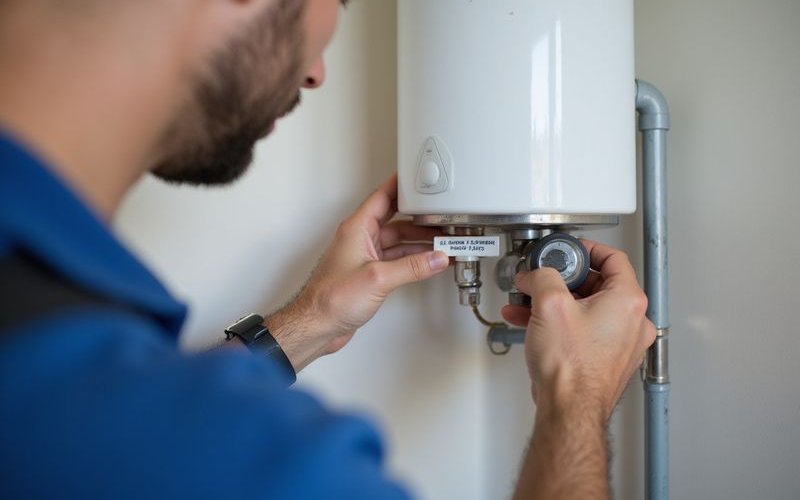
What it means:
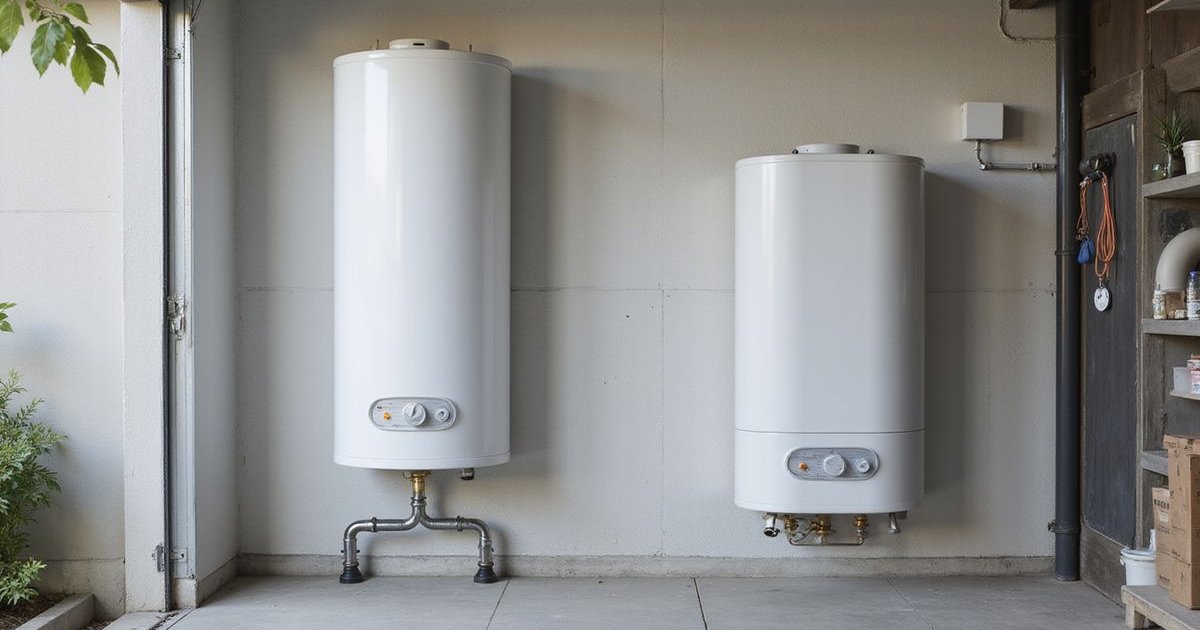
- Gas Storage Tanks (e.g., Rheem, Vulcan, Dux): Typically last 8-12 years.
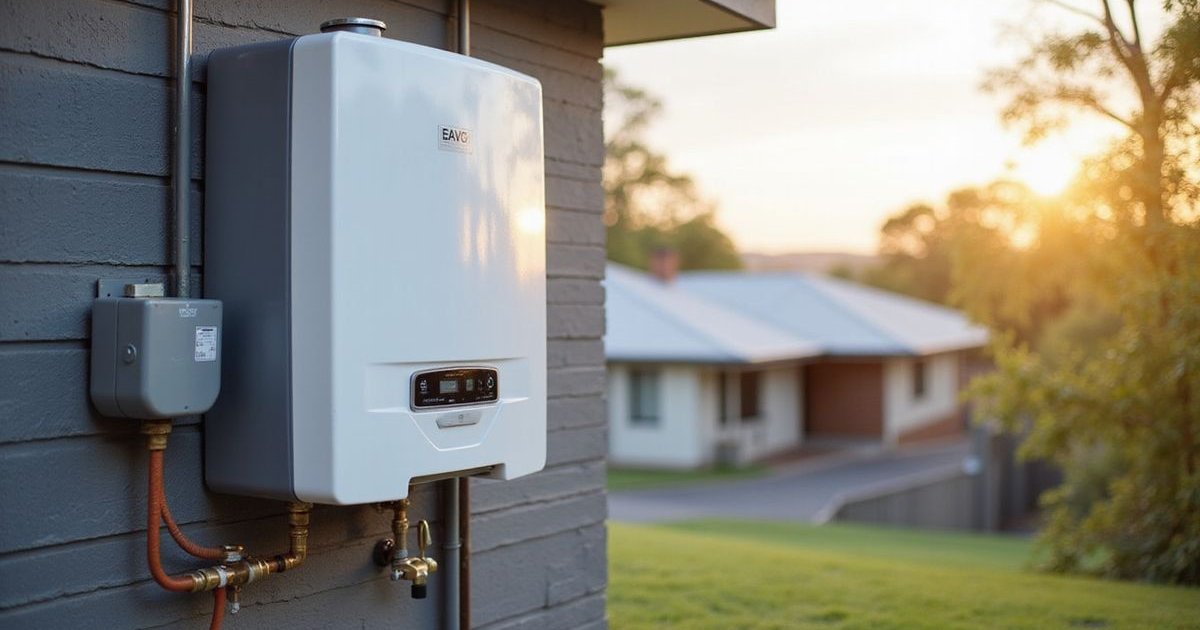
- Continuous Flow Units (e.g., Rinnai Infinity): Can last 15-20 years with proper maintenance.
The Reality Check: Once a storage tank passes the 10-year mark, the internal lining is likely compromised. We advise customers that spending $400 on a repair for a 12-year-old tank is often “throwing good money after bad.”
Urgency: Plan for replacement. Start researching prices now so you aren’t forced to buy the first available unit when yours bursts on a Friday night.
Repair or Replace Decision Guide
Making the call can be tough. We use this simple matrix to help our customers decide.
| Situation | Estimated Cost (AUD)* | Our Recommendation |
|---|---|---|
| System under 6 years, single part failure (e.g., Thermocouple) | $150 - $350 | Repair |
| System 6-10 years, Tempering Valve failure | $250 - $400 | Repair (Valve only) |
| System 8-12 years, Tank Leaking | $1,500 - $3,500+ | Replace Immediately |
| System 10+ years, Rusty Water | $1,500 - $3,500+ | Replace |
| System 12+ years, Major Part Failure (Gas Valve/Burner) | $500+ Repair Cost | Replace (Upgrade to 5-Star) |
*Costs are estimates based on 2025/2026 market rates and vary by brand and location.
Safety Warnings
Gas systems carry inherent risks if ignored.
Call immediately if:
- You smell gas: This smells like rotten eggs. Evacuate the house, turn off the gas at the meter if safe, and call the gas emergency line.
- Yellow or orange burner flame: A healthy gas flame must be blue. Yellow indicates incomplete combustion, which can produce Carbon Monoxide—an odourless, deadly gas.
- Excessive soot: Black marks around the exhaust flue indicate poor venting or burning issues.
- Carbon monoxide detector activates: Never ignore this alarm.
These signs indicate potentially dangerous conditions requiring urgent professional attention.
Getting Expert Assessment
If you’re experiencing any of these signs, contact us for an honest assessment. We’ll tell you if a $200 repair will get you another few years, or if investing in a new continuous flow system is the smarter financial choice—and we won’t push unnecessary replacements.
Have Questions About Your Hot Water System?
Our team is ready to help with expert advice and professional service.