Solar Hot Water Maintenance Guide for Perth Homeowners
Essential maintenance tips for solar hot water systems in Perth. Collector cleaning, pump checks, anode replacement, and when to call a professional.
Here is the comprehensive guide, rewritten from the perspective of Hot Water System Perth with authoritative local insights.
Solar Hot Water Maintenance Guide for Perth Homeowners
Solar hot water systems are reliable, but proper maintenance ensures optimal performance and maximum lifespan. Here’s what Perth homeowners should know.
The Perth Advantage (And The Hidden Risk)
We founded Hot Water System Perth in 2021 because we saw too many good systems failing years before they should. You probably know that Perth is the sunniest capital in Australia, which makes solar hot water a brilliant investment here. From our experience, a well-maintained system in WA can easily last 15 to 20 years.
There is a catch that catches many locals off guard. Perth has pockets of “hard water,” especially in the northern suburbs like Joondalup and Clarkson. This mineral-heavy water eats through storage tanks if you aren’t vigilant. We are going to walk you through exactly how to protect your system from our unique climate and water conditions.
Annual Maintenance Checklist
You don’t need to be a plumber to spot early warning signs. We recommend doing a quick “health check” on your system every time you receive your winter gas or electric bill.
Visual Inspection
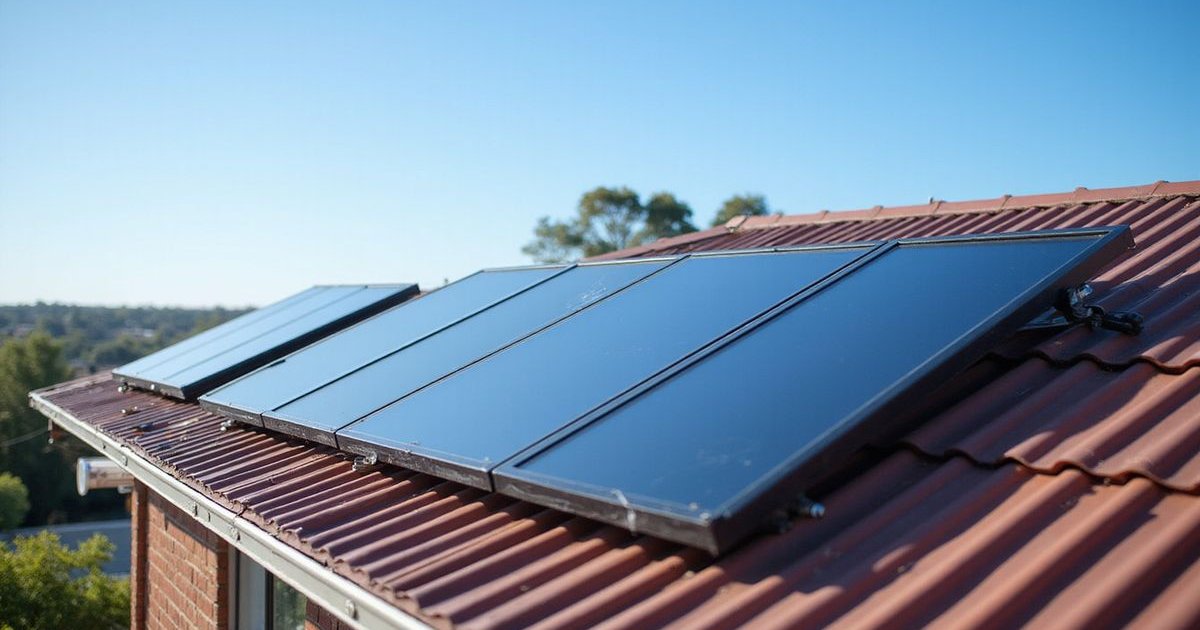
- Check collectors for damage: Look for cracks in the glass or heavy staining.
- Inspect roof mounting: Ensure the frame hasn’t shifted during winter storms.
- Look for “tea staining”: Brown streaks on your roof tiles often indicate a slow leak in the collector connections.
- Check for white crust: This calcium buildup around valves suggests a minor leak that is evaporating before it drips.
System Performance
- Monitor water temperature: Your water should be hot even after a cloudy day if the booster is working.
- Listen for boiling: If your tank sounds like a kettle boiling on the roof, the relief valve might be blocked.
- Note performance drops: If you run out of hot water quicker than usual, it is often the first sign of a failing element or sensor.
Booster Function
- Test the backup: Switch your booster off for a day in summer to ensure the solar panels are actually doing the work.
- Verify thermostat settings: WA regulations require water to be stored at 60°C to prevent bacteria like Legionella, but it should be delivered to your tap at 50°C.
Collector Cleaning
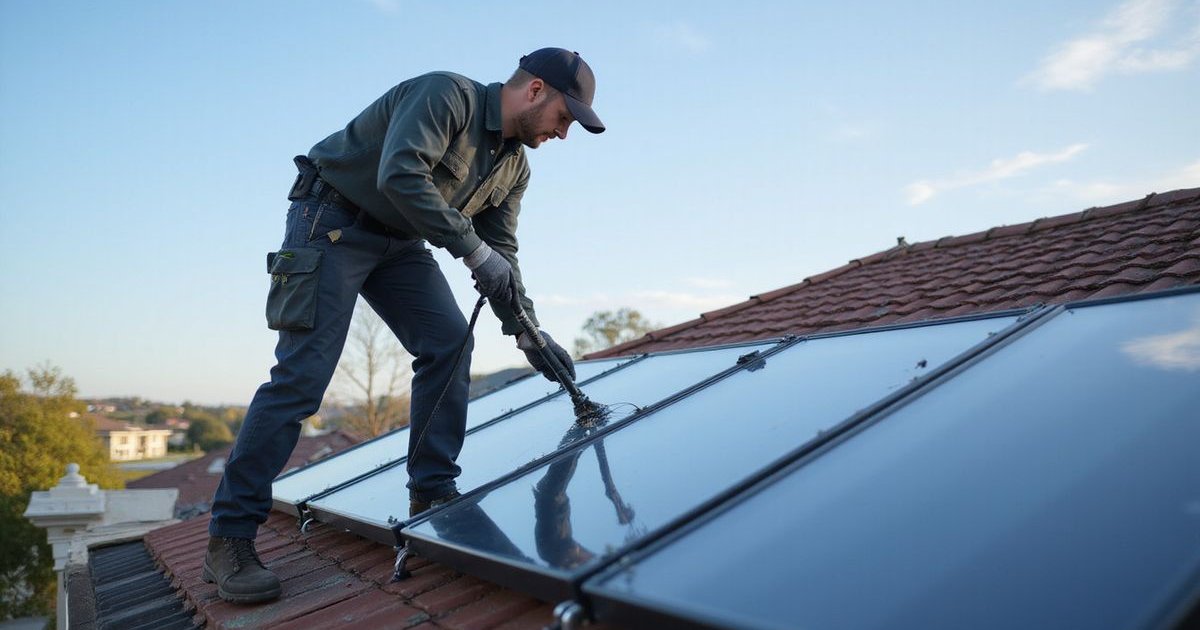
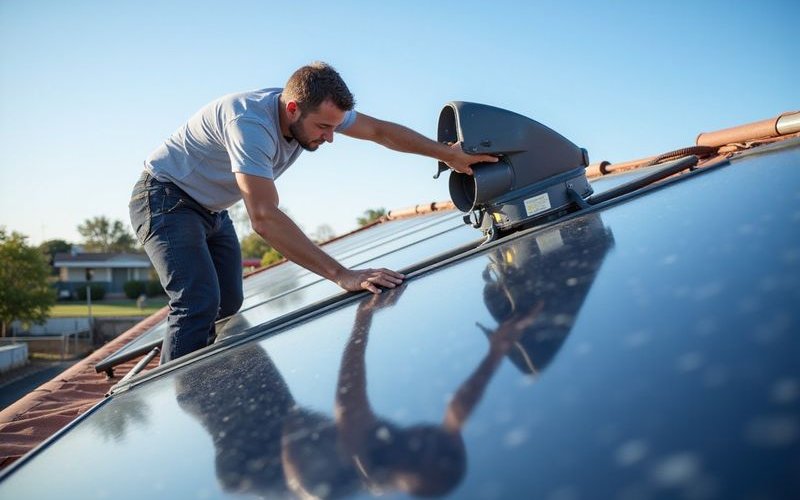
Perth’s dry climate means dust accumulation on collectors. Bird droppings, leaves, and general grime reduce efficiency. Research shows that dirty panels can lose 3% to 7% of their efficiency, which adds up on your energy bill.
The “Thermal Shock” Warning
Never hose down your solar collectors in the middle of a hot Perth day. Cold water hitting hot glass that has been baking in 40°C heat can cause immediate shattering. This is a mistake we see far too often.
DIY cleaning:
- Time it right: Clean only in the early morning (before 8 AM) or late evening.
- Stay on the ground: Use a high-pressure hose from the ground level if you can reach.
- Avoid chemicals: Harsh detergents can damage the rubber seals between the glass and the frame.
- Safety first: If your roof is steep or double-story, do not risk climbing up.
Professional cleaning:
- Recommended frequency: Every 2-3 years is standard, or annually if you live near new developments with heavy dust.
- What we do: We check the roof mounting bolts for corrosion while we are up there.
- Cost vs Benefit: A professional clean typically costs between $100 and $200, which pays for itself by extending the life of your collectors.
Tank Maintenance
This is the most critical section for preventing expensive replacements. The tank is the heart of your system, and it is under constant attack from minerals in the water.
Sacrificial Anode Replacement
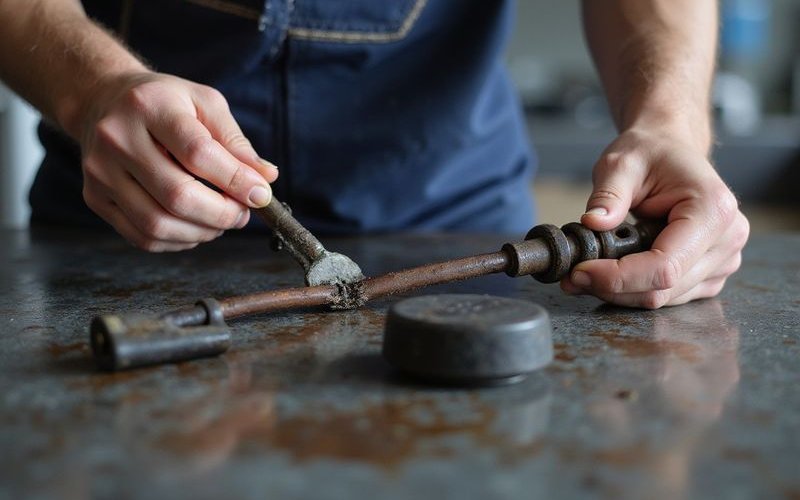
Solar tanks contain a metal rod called a sacrificial anode. Its only job is to rust so that your tank doesn’t. Once this rod is depleted, the water starts eating the steel of your tank instead.
The “Hard Water” Factor: In standard Perth water, these last about 5 years. If you live in areas with hard water, we have seen them dissolve in as little as 3 years.
- Magnesium (Black Cap): Standard for most areas.
- Aluminum (Blue Cap): Often better for hard water areas with high Total Dissolved Solids (TDS).
Temperature and Pressure Relief (TPR) Valve
This valve is your system’s safety parachute. It releases pressure if the tank gets too hot.
- The Test: Lift the lever gently for 3-5 seconds.
- The Result: Hot water should rush out and stop immediately when you let go.
- The Warning: If it keeps dripping after you release the lever, it needs replacing.
- Frequency: Manufacturer guidelines (like Rheem and Solahart) suggest you do this every 6 months.
Pump Systems (Split Systems)
Many modern homes in Perth use “split systems” where the tank is on the ground and panels are on the roof. These rely entirely on a small circulation pump.
Signs of Pump Failure
- The “Grinding” Sound: If your quiet system starts humming or grinding, the pump bearings are likely worn.
- Cold Water in Summer: If panels are hot but water is cold, the pump isn’t moving the heat to the tank.
- Controller Errors: Look for flashing red lights on your controller unit.
Pro Tip: We recommend replacing these pumps preventively every 10-12 years. Waiting for failure often happens on a Friday afternoon when emergency call-out fees apply.
When to Call a Professional
Some issues require a licensed plumber or electrician. Contact us if you notice:
- Significant temperature drops: The water is lukewarm even with the booster on.
- Unusual noises: Banging (water hammer) or boiling sounds.
- Visible leaks: Any water pooling at the base of the tank.
- Constant booster usage: Your gas or electric bill has spiked unexpectedly.
- Error codes: Common Perth brands like Rheem or Rinnai will display codes (e.g., Code 51 or flashing red LEDs) on the controller.
Professional Service Schedule
Regular professional maintenance extends system life from 15 years to 20+ years. We suggest the following schedule for Perth conditions:
| Frequency | Service Level | Key Tasks Included |
|---|---|---|
| Every 3 Years | Hard Water Check | Anode inspection (North Perth/Hills), TPR valve test. |
| Every 5 Years | Major Service | Replace anode, flush tank sediment, clean collectors, check electrical connections. |
| Every 10 Years | System Overhaul | Assessment of pump, replacement of TPR valve, check of tempering valve. |
DIY vs Professional Maintenance
Knowing your limits can save you money and keep you safe.
Safe for DIY:
- Ground-level visual inspection
- Monitoring performance and bills
- Testing the TPR valve lever (wear gloves!)
- Checking booster thermostat settings
Require Professional:
- Roof access: Working at heights requires safety harnesses and training.
- Anode replacement: This requires special tools and heavy lifting.
- Pump repairs: Electrical work must be done by a licensed professional.
- Gas booster servicing: Only a licensed gas fitter can legally service these components.
- Tempering valve adjustment: This requires a thermometer and precise calibration to prevent scalding.
Contact Us
For solar hot water maintenance, servicing, or repairs in Perth, contact us. We service all solar hot water brands and can establish a maintenance schedule to protect your investment.
Have Questions About Your Hot Water System?
Our team is ready to help with expert advice and professional service.